
Recovering Millions in Value Hidden within Your Process
Specializing in
Process Improvement
Eliminating Process Waste Leveraging Lean Six Sigma (DMAIC)
Advanced Process Control to Tighten Output Distribution
Improve Reliability with Control Software Optimization
Legacy Software Modernization
Over 13 Years
Over $20 Million
The Tactical Edge
of Industrial Automation, R&D, and Maintenance Expertise
in Proven Operational Savings & Waste Recovery Annually
Modernized
a 1980s Legacy System Successfully
Zero-Downtime Software-First Optimization
Zero
The Proof
Industrial ingot-cropping saw failing to keep up with pace of downstream equipment
The Work:
Audited process, identified waste and a curious equipment health issue. Experimented with key process variables to eliminate waste and address a common denominator between health and cut speed.
The Impact:
Eliminated future equipment install at a price of $10M+
Increased equipment throughput by 25%
Increased saw blade reliability by over 300%
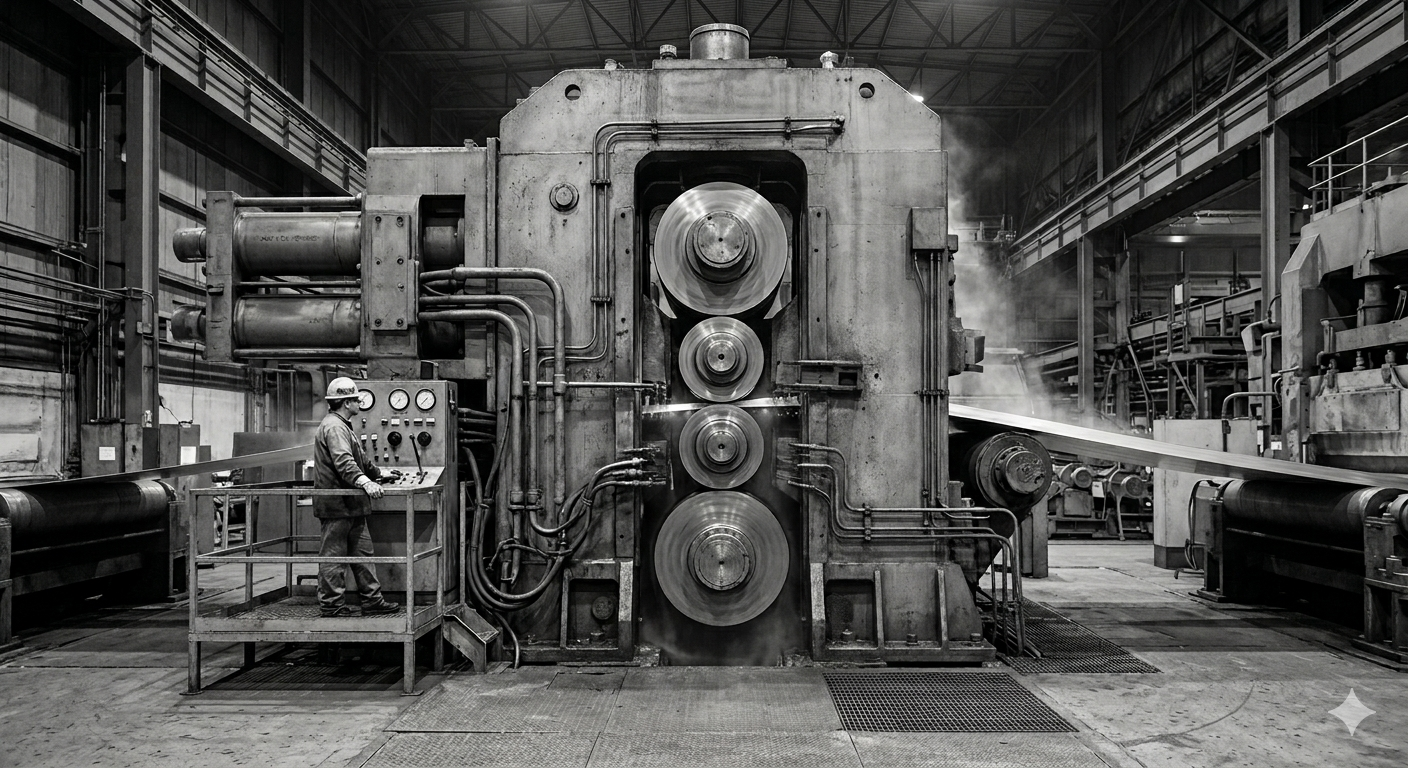
1940s Aluminum Rolling Mill Running off 1980s control code and processor
The Work:
Translated and migrated main control software from the vintage processor to an already active footprint of a modern PLC within the mill’s active infrastructure.
The Impact:
Eliminated downtime risk from vintage hardware failure and respective experience attrition.
Improved inter-system communication reliability and availability.
The Impact:
Increased hot line throughput by 10% while running that equipment.
Hydraulic Material Handling of Ingots Causing Hot Line Downtime
The Work:
Audited process, identified numerous opportunities for parallel operation of equipment sequence steps, and implemented zero-downtime software changes to realize the benefits.
The Architect
Where Theory Meets the Floor
Data tells you what’s happening. The floor tells you why.
Some consultants are happy to sit in a glass office, crunching numbers from a remote location, detached from the process throughout the length of their projects. I am not one of them. My career has been built in the heat of manufacturing environments, defined by 13+ years of blood, sweat, and tears. I believe that an algorithm is only as good as the mechanical reality it controls, and behind every KPI and algorithm is a person moving metal.
The Philosophy
My approach - Tactical Process Solutions - is rooted in a simple truth: You cannot optimize what you can’t see.
Physical Validation: If I can't put my eyes on the equipment, I can't guarantee the result. Familiarity with the process can bridge the gap between data science and the grit of the production line.
The Human Element: I build HMIs and tools that serve the people running them. If a tool doesn't make its user’s life easier and more effective, it isn't a solution.
Continuous Refinement: Using the DMAIC process and iterative algorithmic tuning, I don't just "fix" problems; I hunt for the mathematical "sweet spot" where your process achieves its highest possible capability.
The Background: Driven by the “Impossible”
I didn't learn process optimization in a vacuum; I learned it in the trenches of high-pressure manufacturing environments. Over 11+ years, I’ve developed a reputation for being the "last line of defense"—the one called in when a system is deemed too old to save, too complex to tune, or too critical to take offline.
My background is a fusion of mechanical grit and digital precision. I don't just write code; I build the tools I wish I’d had a decade ago. Whether I’m iteratively tuning, or creating an algorithm to shave seconds off a cycle or hand-wiring a legacy migration, my work is fueled by a genuine obsession with making things run better, faster, and more reliably than they were ever designed to.
The experience makes my perspective unique: I didn't start in a design office. Prior to my 11+ years of engineering experience I started as a Maintenance Foreman, leading the teams that kept the floor running for 2 years. This 'boots-on-the-ground' foundation informs every line of code I write today. I don't just engineer for the process; I engineer for the people and the tools that have to sustain it.
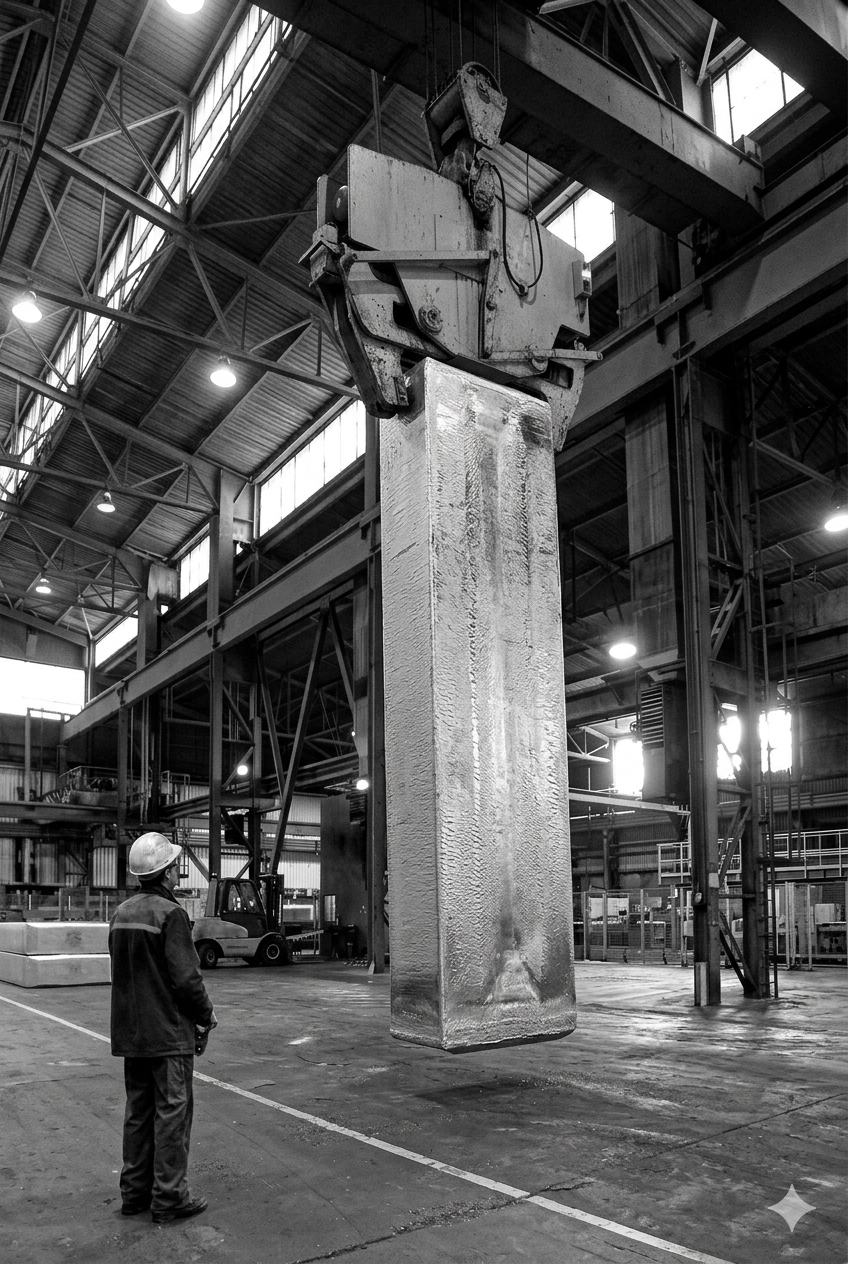
AI generated photo of an operator lifting a ~15 ton aluminum ingot with a crane
The Context
Industry Experience
Metals & Mining
Applicable Industries
Any with large milling assets
Lumber Mills
Pulp & Paper
Cement plants
Glass manufacturing
Refining
Equipment Experience
Hot Processes
Aluminum Casting
Aluminum Degassing & Filtering
Plate Cropping Shears
Rotary-Hydraulic Dual-Blade Actuating
2000 Ton Hydraulic
Rolling Mills
Reversing Mills up to 10,000 HP
Tandem Mills
Furnaces
Melting Hearth - Tilting & Non-Tilting
Holding Hearth - Tilting & Non-Tilting
Heat Treat - Plate and Sheet
Stress-Relief / Reheat
Homogenization
Heat-to-Roll
Annealing
Equipment Experience
Cold Processes
Cold Rolling
Ingot Scalpers
Ingot Cropping Saws
Material Handling
Automated Rail-Guided Vehicles (ARGVs)
Automated Guided Vehicles (AGVs)
Up-Enders and Down-Enders
Orientation Manipulators
Stationary Roller Tables
Flipping Roller Tables
Lifting Roller tables
Cranes